
Share Dr. Eugene Robert Terry's obituary with others.
Invite friends and family to read the obituary and add memories.
Stay updated
We'll notify you when service details or new memories are added.
You're now following this obituary
We'll email you when there are updates.
Select your format and elements to print


IN LOVING MEMORY OF Dr. Eugene Robert Terry
Dr. Eugene Robert
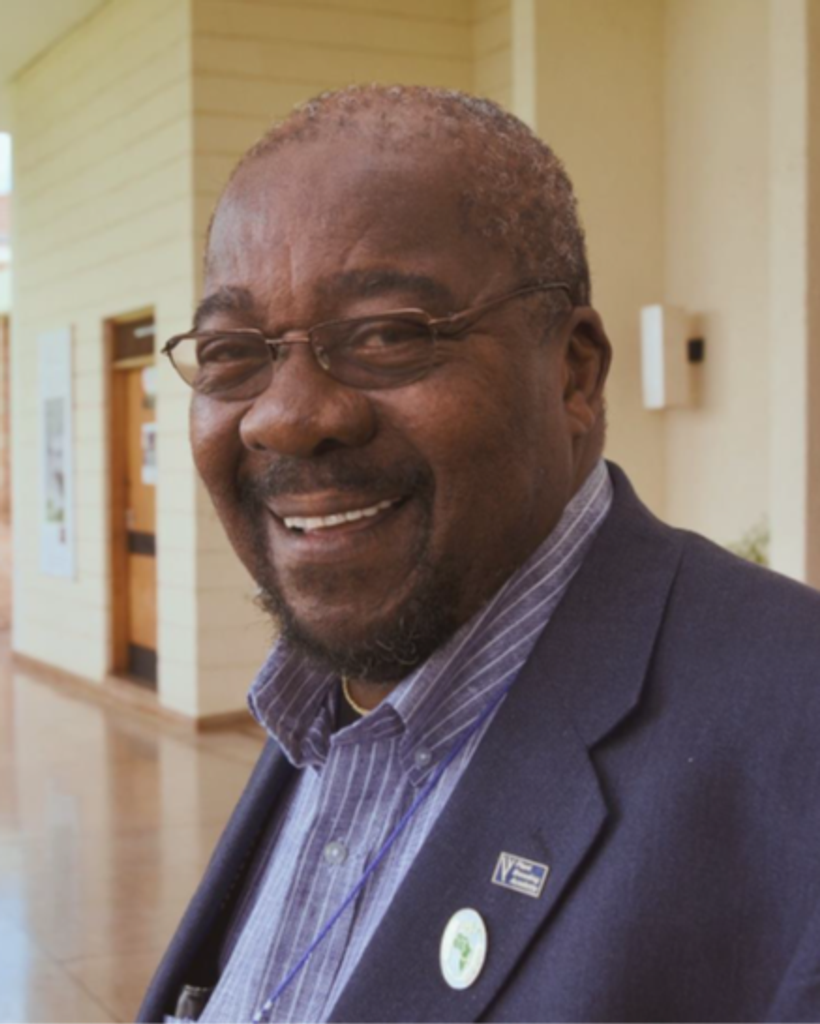
Terry
Jun 11, 1937 — Apr 7, 2026
Washington, DC
Dr. Eugene Robert Terry's Obituary
IN MEMORIAM
Dr. Eugene Robert Terry
11 June 1937 – 7 April 2026
Freetown, Sierra Leone – Washington, D.C.
It is with profound sadness and a deep sense of loss that we announce the passing of Dr. Eugene Robert Terry, a titan of African agricultural science, a devoted son of Sierra Leone, and a consequential figure in the global effort to feed and sustain the African continent. Born in Freetown, Sierra Leone, on 11 June 1937, Dr. Terry lived a life of steadfast and optimistic dedication to the cause of Africa’s development and leaves a legacy of scientific achievement, institutional leadership, and quiet pan-Africanism that will endure.
A Son of Sierra Leone
Eugene Robert Terry grew up in a Sierra Leone still under British colonial administration, in a country that would go on to experience some of the most turbulent chapters in African post- independence history. From early in his life, he was drawn to science and the natural world, and with characteristic determination he pursued an education across continents.
He earned his Bachelor of Science in Agriculture from McGill University, Montreal, in 1964 — where he also won the Rohm and Haas Prize for Best Performance in Plant Pathology in 1963 — before completing his M.Sc. in Plant Pathology at the same institution in 1966. He went on to earn his doctorate from the University of Illinois at Urbana-Champaign in 1970, specialising in insect vector transmission of virus diseases.
His return to Sierra Leone to teach at Njala University College was the first act of a life’s work in service to Africa. He would not stay long before the continent called him to a wider stage — but he never ceased to identify, with pride and anguish, as a Sierra Leonean.
The Quiet Revolution: Feeding a Continent
Dr. Terry’s name is deeply intertwined with that of a great agricultural triumph of the twentieth century. In 1973, he joined the International Institute of Tropical Agriculture (IITA) in Ibadan, Nigeria, as a plant pathologist. There he entered a celebrated partnership with Dr. Sang Ki Hahn, a Korean-born plant breeder. Together, they set out to solve one of the most intractable problems in African food security: the devastating toll of cassava mosaic virus and bacterial blight on the crop that served as the primary staple food for hundreds of millions of Africa’s poorest people.
What Hahn and Terry achieved has been called the “Quiet Revolution.” Through meticulous breeding—they developed the Tropical Manioc Selection (TMS) varieties, disease-resistant strains that yielded at least forty percent more than traditional varieties, without additional fertilizer or pesticide. By 1998, seventeen African countries had released 130 TMS varieties, covering nine million hectares. Cassava production on the continent tripled by the year 2000.
For millions of small farmers across sub-Saharan Africa, the TMS varieties meant marketable surpluses and cash incomes, often for the first time in living memory. This was not the work of governments or grand pronouncements. It was the work of science — patient, collaborative, continent-serving science — and Eugene Terry was at its heart.
Leader, Builder, and Diplomat of Science
As Director General of the West Africa Rice Development Association (WARDA) from 1987 to 1996, he reorganized and elevated the institution into a centre of international scientific excellence, overseeing the development of its strategic plans and the construction of its mai research centre and headquarters in Bouake, Côte d’Ivoire — a project worth approximately eleven million dollars — while building the regional networks and national partnerships that would outlast his tenure. In recognition of his contributions to that country’s scientific life, the Government of Côte d’Ivoire awarded him the Officier de l’Ordre du Mérite Ivoirien in 1993.
Following a roughly 5-year stint with the World Bank, Terry was called upon to undertake the entrepreneurial challenge of serving as the founding Implementing Director of the African Agricultural Technology Foundation (AATF), which he established from the ground up in Nairobi, Kenya. His strategic leadership shaped AATF’s foundational mission of facilitating public–private partnerships to improve access to agricultural technologies for smallholder farmers across Africa — a mission the organization continues to pursue to this day.
His institutional reach was remarkable. He chaired the Board of Trustees of the International Centre for Research in Agro-forestry (ICRAF), served on the Board of Directors of the Syngenta Foundation for Sustainable Agriculture, and held an Honorary Professorship at the University of KwaZulu-Natal. He was a Fellow of the African Academy of Sciences, a member of advisory boards from Stockholm to Nairobi, and a founding member of the International Society for Tropical Root Crops—Africa Branch, which he also served as first Editor-in-Chief.
He was also a teacher and mentor. Over the course of his career, he supervised doctoral and master’s students across multiple African universities, building the next generation of the continent’s agricultural scientists. The IITA cassava training programme that Terry had helped shape had produced twenty-five PhD and forty-three master’s scientists. Most of today’s leaders of African root crops improvement programmes are their intellectual descendants.
Tributes
The African Agricultural Technology Foundation, which Dr. Terry founded, has expressed its sorrow at his passing. In a letter of condolence to the family, Dr. Canisius Kanangire, AATF’s Executive Director, wrote that Dr. Terry “was more than a pioneer of this organization; he was a visionary leader whose passion and dedication helped shape the future of AATF and agricultural development across Africa.” Dr. Kanangire recalled a brief personal encounter with Dr. Terry as “truly inspiring,” describing a man of profound clarity of thought, intellectual depth, and genuine passion for Africa’s agricultural transformation. “His legacy,” he wrote, “lives on in the millions of farmers and communities whose livelihoods have been transformed through his vision and leadership.”
The Man Behind the Work
In the memoir he published in his later years, “Footsteps – An African Journey,” Dr. Terry reflected with characteristic honesty on the great paradox of his generation: gifted Africans who had devoted their lives to the development of their continent, and who found themselves, in the twilight of those lives, forced to reckon with how much remained undone. He was not a man given to self-congratulation. He believed, with a seriousness that permeated everything he wrote, in the concept of “incrementalism” — that every patriot owes their society their small contributions of good, and that these accumulate, over time, into something that matters.
By that measure, Eugene Terry mattered enormously. A man of formidable intellect and moral seriousness, he brought scientific rigour and institutional vision to bear on the real and present hunger of the continent he loved. He worked in Nigeria, Côte d’Ivoire, Kenya, and Washington, D.C., yet always carried Sierra Leone within him. In his final years he resided in Washington, where he continued to contribute to the spheres he had spent a lifetime shaping.
The University of Illinois, which awarded him its Alumni Association Award of Merit in 2000, the International Society for Tropical Root Crops, which honored him with its Distinguished Service Award in 1986, and the many institutions he served across decades have lost a founding spirit. Africa has lost one of its most faithful servants.
Dr. Eugene Robert Terry is survived by his wife, Lorna, children, Orlinka, Olufemi and Moji and grandchildren, Dawah, Mischa, Anaja and Emil. He is survived also by the harvest — in the truest sense — of everything he planted.
Funeral and memorial arrangements will be announced by the family in due course.
Dr. Eugene Robert Terry's Guestbook
Visits: 319
This site is protected by reCAPTCHA and the
Google Privacy Policy and Terms of Service apply.
Service map data © OpenStreetMap contributors